

In the city, chimney sweeping is recommended starting in October.
A protected species
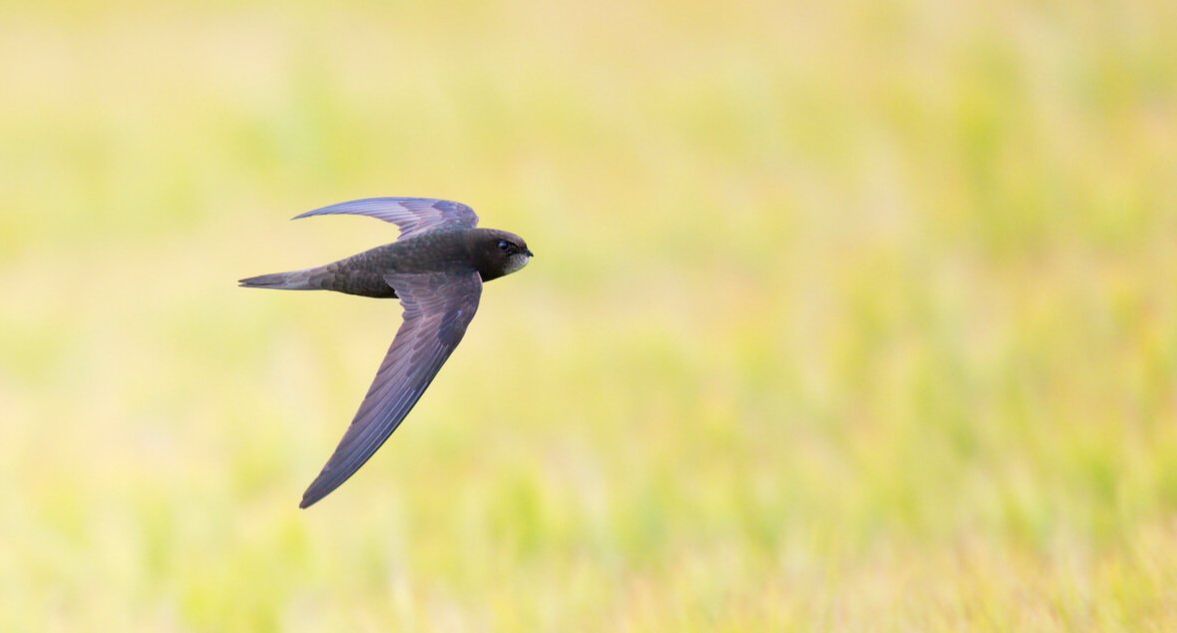
The Chimney Swift is an endangered migratory bird whose Canadian population has plummeted by nearly 88% over the last 50 years.
This insectivorous bird feeds on the wing and typically uses brick, stone, or concrete chimneys for nesting and roosting. Unable to perch like other birds, the Chimney Swift clings to the interior surfaces of chimneys—or similar structures—and attaches its nest to the rough walls. In Quebec, Chimney Swifts may occupy such vertical structures (chimneys, ventilation shafts, hollow trees, etc.) from late April through late September.
Before the arrival of Europeans, these swifts used cavities in large, dead or dying trees for nesting and roosting. However, such natural sites have become increasingly scarce due to deforestation and the loss of mature forests. Over time, the species adapted to using the masonry chimneys of homes and large buildings (such as schools, churches, convents, and factories)—hence the name "Chimney" Swift. Today, the species relies almost exclusively on masonry chimneys for roosting and building its nests.
As a property owner with a structure that could be used by the Chimney Swift, your cooperation is necessary for the recovery of the species.
Most chimneys suitable for the Chimney Swift were built before 1960. To be appropriate for the species, a chimney must be accessible (free of mesh, caps, or covers), constructed from rough materials (such as brick, stone, or concrete), and have the correct dimensions. The swift must be able to spread its wings and fly within the chimney; therefore, the internal flue must have a minimum dimension (diameter or internal diagonal) of more than 28.5 cm.
The Chimney Swift is protected under the *Species at Risk Act* and the *Migratory Birds Convention Act, 1994*, along with its associated regulations. The best way to minimize the risk of violating these laws and regulations is to fully understand how your activities might affect the birds, their nests, and their eggs, and to take reasonable precautions and appropriate avoidance measures. Under these laws and regulations, anyone who kills, hunts, captures, injures, or harasses a migratory bird—or damages, destroys, removes, or disturbs its nest, eggs, or residence—without a permit commits an offense subject to penalties.
Yes, it is safe
Some people mistakenly fear that the presence of a Chimney Swift nest in their chimney could cause an obstruction or increase the risk of fire. In reality, a chimney is used by only a single pair of birds, which build a very small nest—about the size of a quarter of a grapefruit. A Chimney Swift’s nest occupies only a tiny fraction of the available space within a chimney. Consequently, Chimney Swifts nesting in a chimney pose no fire risk, cause no structural damage, and present no danger to human health.
To report a sighting of a Chimney Swift entering or exiting a structure:
Send an email to the *Conseil régional de l'environnement de Laval* (Regional Environmental Council of Laval).
Canadian Wildlife Service: send an email
Sources:
Environment and Climate Change Canada
*Québec Oiseaux* provides a decision-making tool for chimney owners.

