

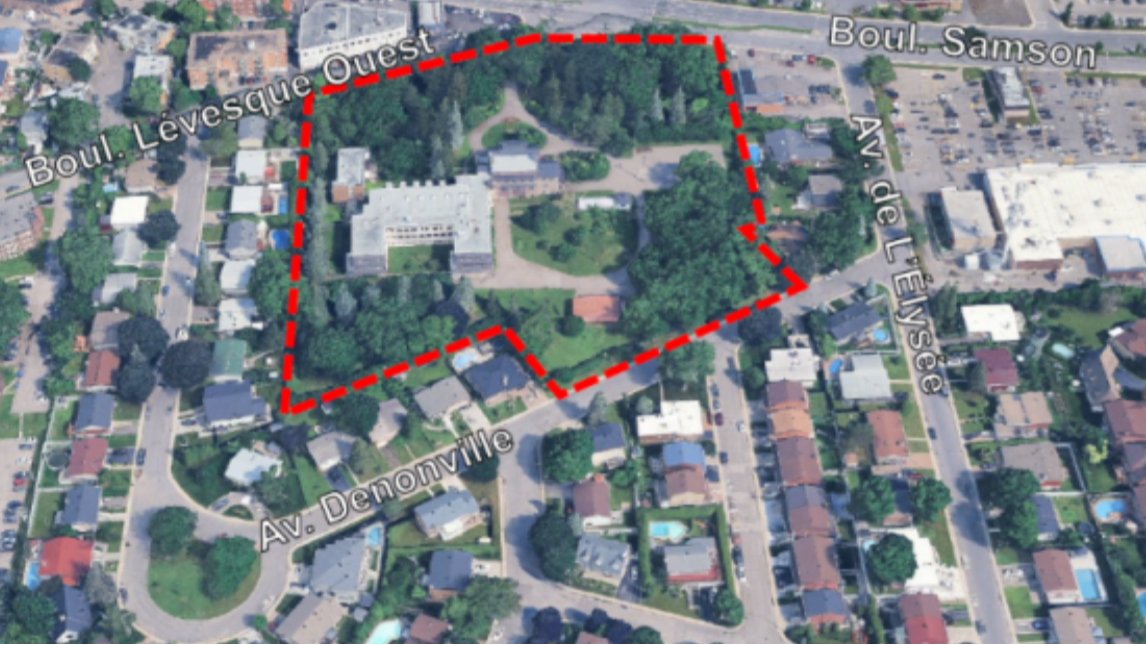
The Conseil régional de l’environnement de Laval (CRE de Laval) took part in the public consultation on the proposed residential development at 4730 Boulevard Lévesque Ouest, near the intersection of Boulevard Samson. The organization submitted a formal opinion outlining its concerns and recommendations to help better balance housing development with environmental protection.
The project calls for the construction of two residential buildings containing 332 housing units, including 143 below-market units. While recognizing the importance of diversifying the housing supply and improving access to affordable housing, CRE de Laval believes that certain aspects of the project should be reconsidered to reduce its environmental impact.
Preserving Trees and Reducing Urban Heat Islands
One of CRE de Laval’s main concerns is the loss of tree canopy. According to the plans submitted, between 59% and 67% of the 160 trees currently on the site could be cut down. Such a significant loss of vegetation could reduce access to natural cooling, worsen urban heat island effects and diminish habitats for birds and pollinating insects.
CRE de Laval therefore recommends revising the site plan to preserve more trees, particularly mature and healthy ones, and implementing appropriate tree protection measures and compensatory planting.
Improving Stormwater Management
The project would also result in a significant increase in impermeable surfaces, from approximately 5,528 to 10,168 m², representing an 84% increase. This could reduce the natural infiltration of rainwater into the soil and increase stormwater runoff, placing additional pressure on municipal drainage infrastructure.
To mitigate these effects, CRE de Laval recommends incorporating green infrastructure, such as rain gardens, permeable surfaces and landscaped green spaces. Underground parking could also help reduce the project's footprint and preserve more permeable ground.
Accessible Housing and Sustainable Mobility
Beyond environmental concerns, CRE de Laval highlights two other important considerations. First, the organization believes that the proportion of below-market housing, representing 143 of the 332 units planned, should be increased in light of the current housing crisis.
Second, sustainable transportation should be integrated into the project from the outset. Measures such as secure bicycle parking, connections to existing cycling paths and consideration of access to local bus services would encourage residents to choose active and public transportation.
Balancing Residential Development with Environmental Protection
For CRE de Laval, building new housing and protecting natural environments should not be opposing objectives. It is essential to design projects that meet the community's housing needs while preserving the ecological functions of the land, reducing urban heat islands and ensuring better stormwater management.
Through its participation in this public consultation, CRE de Laval hopes to contribute to improving the proposed development and reaffirm the importance of integrating environmental considerations from the earliest stages of urban planning.